 Wawa-news.com Local and Regional News
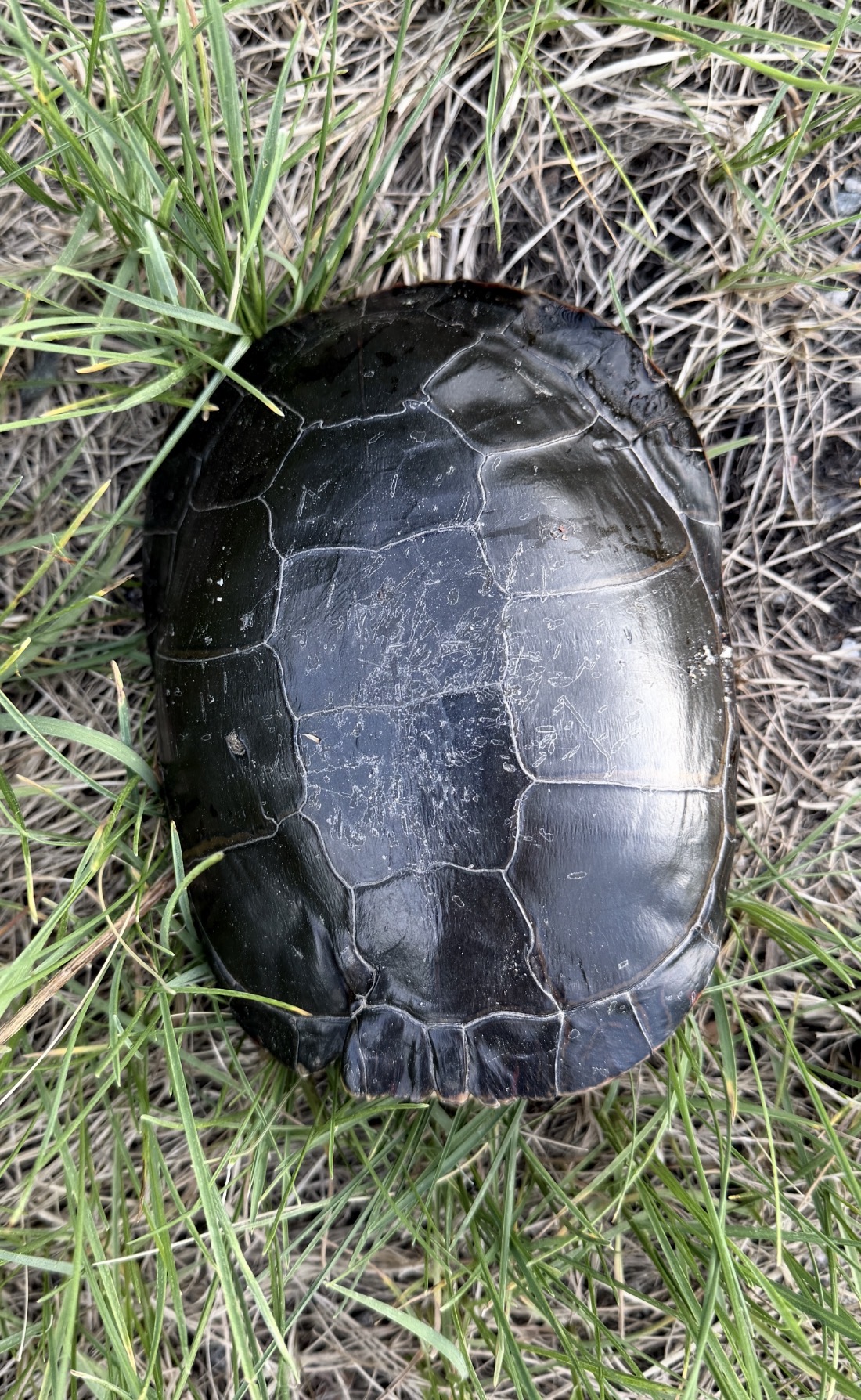
It wasn’t until last year that I saw my first turtles in Northern Ontario. There it was in the middle of the highway that goes between two sections of Lawson Lake. I pulled off the road, and scooched him/her (we didn’t have time to exchange pronouns) off the highway. In all, last year I moved 4 turtles off of Highway 101, the furthest west by the Kinniwabi River Bridge (just east of Kinniwabi Pines Cottages) and the furthest east by Wildwood Bible Camp. An additional one was crushed beyond any hope of life. The turtles were only seen for about 3 weeks.
I saw my first turtle of 2026 yesterday evening, 88 kilometres east of Wawa, stopped in the middle of the eastbound lane. I straddled it (oncoming traffic) and pulled over and parked. I went back and scooched the turtle off the road and into the grassy ditch. That was the direction it was headed in, so I just moved it along a little faster.
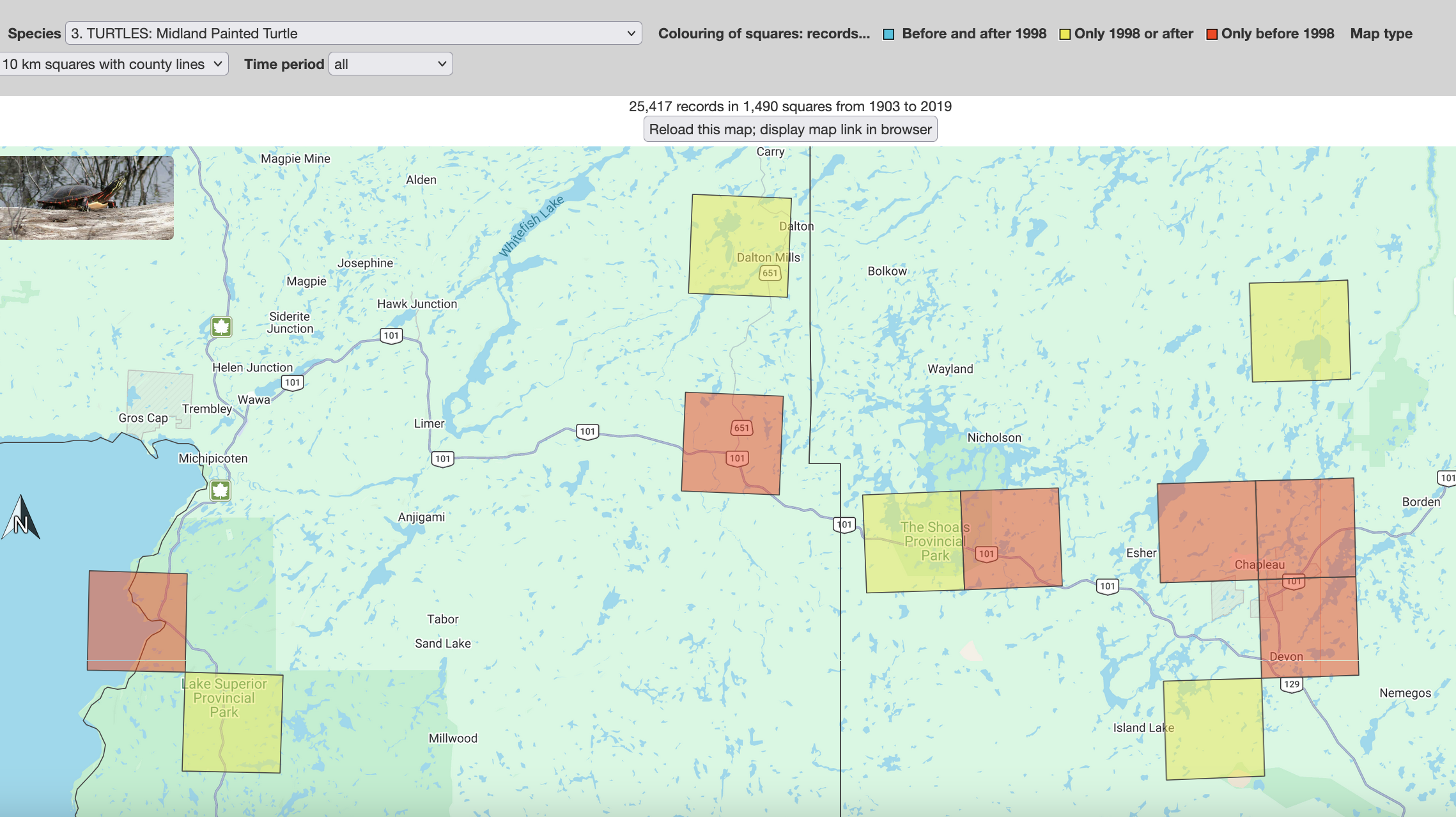
According to Ontario Nature, this is a midland painted turtle (Chrysemys picta marginata), and has a yellow or dark tan plastron (lower shell) with a darker, irregular “butterfly” marking along the midline. This turtle didn’t have a butterfly marking, and further research revealed, “Weller et al. (2010) identified a zone of intergradation of the Western Painted Turtle and the Midland Painted Turtle in the Algoma District of central Ontario, southeast of Lake Superior. Careful review of photographic atlas records showed that some turtles occurring farther east of Lake Superior also demonstrate characteristics intermediate between the two subspecies. Records in Algoma, northern Sudbury, and Cochrane districts should be interpreted with caution as these occur within the suspected zone of intergradation of the Western Painted Turtle and Midland Painted Turtle. Additional survey effort should focus on delineating the zone of intergradation of the Western Painted Turtle and the Midland Painted Turtle east of Lake Superior. So, I don’t know for sure which painted turtle this one is – just that it was safe last night.
“Painted turtles in northern populations may take seven to 10 years for males and 12 to 15 years for females to reach sexual maturity. Females nest from late May to early July, digging their nest in loamy or sandy soil in sunny areas. The clutch contains from four to 13 eggs. Hatchlings may emerge in the fall but sometimes overwinter in the nest and emerge the following spring. They can survive temperatures as low as -10ºC, because they contain a biological “antifreeze” that prevents their tissues from freezing. The temperature of the nest during incubation determines the sex of the offspring.
Painted turtles are largely diurnal (active during the day, rather than at night). Individuals sometimes move long distances overland from one waterbody to another or in search of nesting sites. These turtles are opportunistic feeders and eat algae, invertebrates, fish, frogs, carrion and vegetation. Some individuals live for over 50 years in the wild.”
Please be careful for the next couple of weeks if you are driving along Hwy 101. Give these little guys a chance to survive.
- Be on the lookout for turtles while driving. Learn to identify turtles on the road. They often look like oil slicks or bumps. If you see a turtle on the road, slow down and give it a wide berth when passing. You can also turn on your hazard lights to alert other motorists to its presence.
- If you see a turtle on the road consider helping it: If it is safe to do so, help the turtle cross in the direction it is traveling by placing your hands on the underside (plastron) and topside (carapace) of its shell. To help snapping turtles, watch this video by the Toronto Zoo on how to move a snapping turtle safely. If the turtle is traveling and the road is not busy, walk beside or behind it until it reaches the other side. Helping a turtle that is digging or nesting on the roadside could take a while. Pull your car over, turn the hazard lights on and wait. Do not try to move the turtle or scare it off. If you have a safety kit in your car, place a traffic cone or other marker near the turtle and come back for it later. Make sure to observe nesting turtles from a safe distance (15+ m) to avoid disturbing them.
- Report turtles you see on the road: Use the iNaturalist project ‘Herps of Ontario’ to report observations of turtles, snakes, frogs, and salamanders you find on the road, alive or dead. You can report sightings of other species to the Ontario Road Ecology Group. Data from the Ontario Reptile and Amphibian Atlas is used by many provincial and municipal groups to inform the placement of eco-passages or signs to help animals safely cross roads.
- Sign up to be a turtle taxi: The Ontario Turtle Conservation Centre (OTCC) in Peterborough has a network of volunteers called Turtle Taxis that help transport injured turtles to the OTCC. Turtle Taxis also help release rehabilitated turtles and turtles that hatched at the centre from eggs retrieved from injured females. If you find an injured turtle, call the OTCC helpline for assistance. (Call: 705-741-5000).

- Monday Morning News – September 28 - September 28, 2026
- Saturday Morning News – September 26 - September 26, 2026
- Ontario Investing $1 Million to Modernize and Revitalize Michipicoten Harbour - September 25, 2026