 Wawa-news.com Local and Regional News
Jul 15, 2026 at 18:22
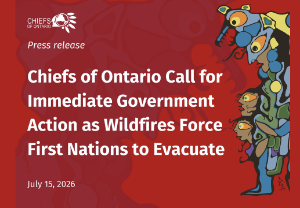 The Chiefs of Ontario are calling on the federal and provincial governments to immediately provide coordinated emergency support as escalating wildfires threaten First Nations across northern Ontario.
As of July 15, First Nations Leadership from the Ontario region have held several meetings to discuss the emerging wildfire crisis in the North. The sessions opened with Knowledge Keeper Fiddler offering a prayer for Namaygoosisagagun First Nation, Whitesand First Nation, Kiashke Zaaging Anishinaabek, Animbiigoo Zaagi’igan Anishinaabek, and all First Nations currently affected by or evacuating because of the wildfires. Chiefs across the region offered support for those directly impacted by the fires.
Several First Nations are facing mandatory evacuation orders issued by their Leadership with support from the Ontario Provincial Police (OPP). As the situation rapidly unfolds, many other Nations are currently undergoing processes to declare states of emergencies and evacuate their communities as well. During the discussions, Chiefs expressed frustration with the bureaucratic processes in place to access emergency response services and a lack of communication from government officials regarding practices in place to declare a state of emergency.
“Jurisdictional disputes and administrative delays have immediate consequences and put lives at risk,” said Ontario Regional Chief Abram Benedict. “The priority of our Leadership is to get people out as quickly and safely as possible. This needs to be everyone’s priority rather than financial discussions and technicalities.”
Members of Namaygoosisagagun First Nation were forced to flee by boat as fires engulfed their community. Residents reported having only minutes to gather their belongings before homes were overtaken by the flames.
“Our people are already mobilizing to help one another. We are on the front lines of this catastrophe that is having international impacts. Our First Nations Leadership, emergency responders, and community members are working to protect their people and homelands,” said Regional Chief Benedict.
Given the scale and severity of the crisis, the Chiefs of Ontario are calling for:
- The immediate removal of jurisdictional and administrative barriers that delay emergency assistance;
- Full and coordinated evacuation, transportation, accommodation, health, and emergency response supports;
- Direct collaboration with First Nations Leadership throughout all response and recovery efforts; and
- Adequate resources for First Nations actively fighting fires and protecting their communities
The wildfires have also forced the closure of major highways which has significantly disrupted the movement of goods and essential services across the region. With ground transportation routes blocked, many First Nations are increasingly dependent on food, medicine, and other critical supplies being flown into their communities.
These closures are compounding the impacts of the emergency and further isolating communities that already face significant transportation and infrastructure challenges. Immediate federal and provincial action is needed to ensure reliable supply routes, emergency air transportation, and the continued delivery of daily necessities.
The Chiefs of Ontario also recognize the pressure being placed on communities and municipalities receiving evacuees. Many host locations are already managing increased summer travel or accommodating people displaced by other emergencies. All host communities are encouraged to welcome evacuees with compassion and work collaboratively with First Nations Leadership and emergency response-partners.
The increasing frequency and severity of wildfires are not isolated events. They are part of a broader climate crisis that is placing First Nations at growing risk. All levels of government must work directly with First Nations to strengthen emergency preparedness, evacuation infrastructure, fire prevention, community response capacity, and long-term climate justice.

- Men’s Night Golf – Results of October 8th - October 10, 2026
- Two new student trustees begin their term at CSC Nouvelon - October 8, 2026
- SSM Police: Fraud Alert – Cellphone Service Provider Scams - October 8, 2026