 Wawa-news.com Local and Regional News
Nov 19, 2026 at 11:01
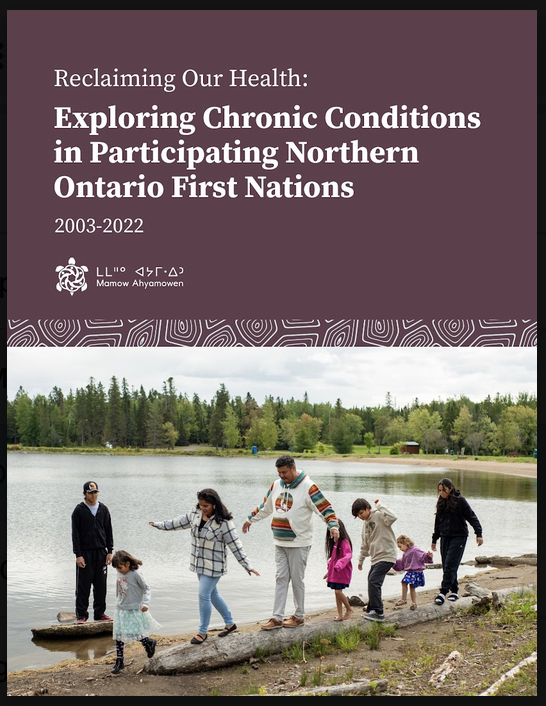 Mamow Ahyamowen, an alliance of eleven First Nations health and social services organizations, today released Reclaiming Our Health: Exploring Chronic Conditions in Participating Northern Ontario First Nations at the Matawa Training and Wellness Centre in Thunder Bay. The report shows how common 22 chronic conditions were among members of 70 First Nations from 2003 to 2022, and how that compares with Ontario overall. The data belongs to the communities.
Every visit to a doctor or a hospital leaves a record, and those records have been collected for decades. Communities have rarely had access to this data. Mamow Ahyamowen, which celebrated ten years in early 2026, was formed to change that. This report follows Learning from Our Ancestors (see: https://mamow.live/lfoa26), the alliance’s 2020 study that explored the mortality experiences of community members, including the chronic conditions they were living with before they passed away. Reclaiming Our Health looks at the community members still with us.
The findings are illuminating, some confirming inequities that communities have described for decades. Based on 2019 rates, the last full year before the pandemic:
- Three of the five most common conditions were related to mental health and substance use: mood and anxiety disorders, substance use disorder, and other mental health conditions. High blood pressure and osteoarthritis completed the five.
- Rheumatoid arthritis was 14.4 times higher for community members than for Ontario overall. Chronic pancreatitis was 4.7 times higher, and substance use disorder 4.2 times higher.
- While many chronic conditions were most common among older community members, there were a few exceptions. Mental health and substance use conditions were most common for community members in their thirties and forties, and asthma for those in their twenties.
The report also tracks changes from 2003 to 2022.
- It found big increases in both new diagnoses and the number of people living with cirrhosis, kidney failure, and schizophrenia and other psychotic disorders. This could mean more community members are being diagnosed, but that they are living longer or that fewer of them are passing away.
- It found big decreases in both new diagnoses and the number of people living with chronic obstructive pulmonary disease (COPD), osteoporosis, and congestive heart failure. This could mean fewer community members are being diagnosed, but that they are not living as long or that more of them are passing away.
These findings are for the 70 participating First Nations together. Mamow Ahyamowen also prepared a supplementary document that presents results for each First Nation without identifying them. Communities can use it to compare themselves with one another and to see how health conditions vary between them. For example, the prevalence of cancer was 4.8 times higher in the community with the highest rate compared to the community with the lowest. No two communities are the same.
“As you read this report, we encourage you to keep in mind that behind each number is a person,” the Mamow Ahyamowen Steering Committee writes in its message at the front of the report. “They are children, cousins, parents, grandparents, aunties, uncles, friends, and community members. We see this report as one step in the journey to reclaim the wellbeing that our people have always known.”
In July 2024, staff, Steering Committee members, and other representatives from member organizations met to review the early findings together. The numbers tell part of the story. They are best read with care, in the context of what communities already know.
“Once we had our initial findings, we went through them with Steering Committee members and other representatives from member organizations,” said Christina Vlahopoulos, Project Manager for Mamow Ahyamowen. “We included what they shared in the report alongside the numbers to provide that context.”
The report can serve as a resource for communities, and for everyone who plans and funds health care services with them. Member organizations will use it for health planning, advocacy, and funding applications. Mamow Ahyamowen is asking governments and health system partners to use it too, and to work with communities on what the numbers show. The Steering Committee is asking for two things:
- Mental health and substance use supports need proper resources, as part of primary care funding. In 2019, about half of community members had experienced a mental health or substance use condition at some point in their lives. Several communities declared states of emergency for mental health and substance use during the years the report covers.
- As the supplementary document highlights, no two communities are the same. Each community is unique, so funding needs to be flexible enough to follow community priorities. Funding also needs to be long term so that successful programs can continue. The report notes that community programs, such as those for diabetes, usually depend on government funding, which is not always available.
“While some of the findings may seem discouraging, we invite you to think of this work as a flashlight,” the report concludes. “Beyond simply shining a light on the challenges facing our people, we can use these findings to illuminate a path forward.”
The report uses health administrative data, the records created when people use the health care system, linked with the Indian Register at ICES. Rates were standardized, a statistical technique used to account for differences in age and sex between populations. The data in this report is owned by the First Nations communities who gave consent to participate in the project, with Mamow Ahyamowen as the data steward. In keeping with OCAP® principles, findings are shared at the alliance level, and each organization and community decides how and with whom they share their reports.
The next phase of the project will look at community members living with more than one chronic condition at a time, and at how they use health services.
The report is being shared this morning with Steering Committee members, Elders, health leaders from member organizations, and partners. The program is streamed live to invited guests and media, and a recording will be posted at mamow.live/mrel. The day continues with lunch, open sharing, and a Ceremony guided by an Elder, honouring the research and the people represented in the data.
The full report, a summary of findings, and supplementary tables are available at mamowahyamowen.ca/reclaiming-our-health.

This is a media release by the organization. If you would like to send Wawa-news.com a media release to be published, send it to Brenda Stockton, Editor/Publisher, [email protected]
Latest posts by This Media Release (see all)
- Northern Ontario First Nations Release Twenty Years of Their Own Evidence on Chronic Conditions - November 19, 2026
- CAPT to host a public town hall meeting tonight about possible ski Train - November 19, 2026
- Incident at Canadian Forces Base Wainwright – UPDATED - November 14, 2026